Pranshi Agarwal (Assistant Professor HRM, JKBS)
Your degree may help you enter the interview room, but your mindset, confidence, and practical skills are what truly shape your career. At JKBS, students are encouraged to move beyond academics and build experiences that prepare them for the real world.
For years, students believed that good grades were the biggest key to career success. A strong marksheet was considered the ultimate achievement. But today, the corporate world is changing rapidly, and so are recruiter expectations.
In 2026, companies are no longer hiring candidates based only on academic scores. A high GPA might help you get shortlisted for an interview, but once the conversation begins, recruiters look far beyond numbers.
They want professionals who can think clearly, communicate confidently, solve problems practically, and adapt quickly to changing business environments.
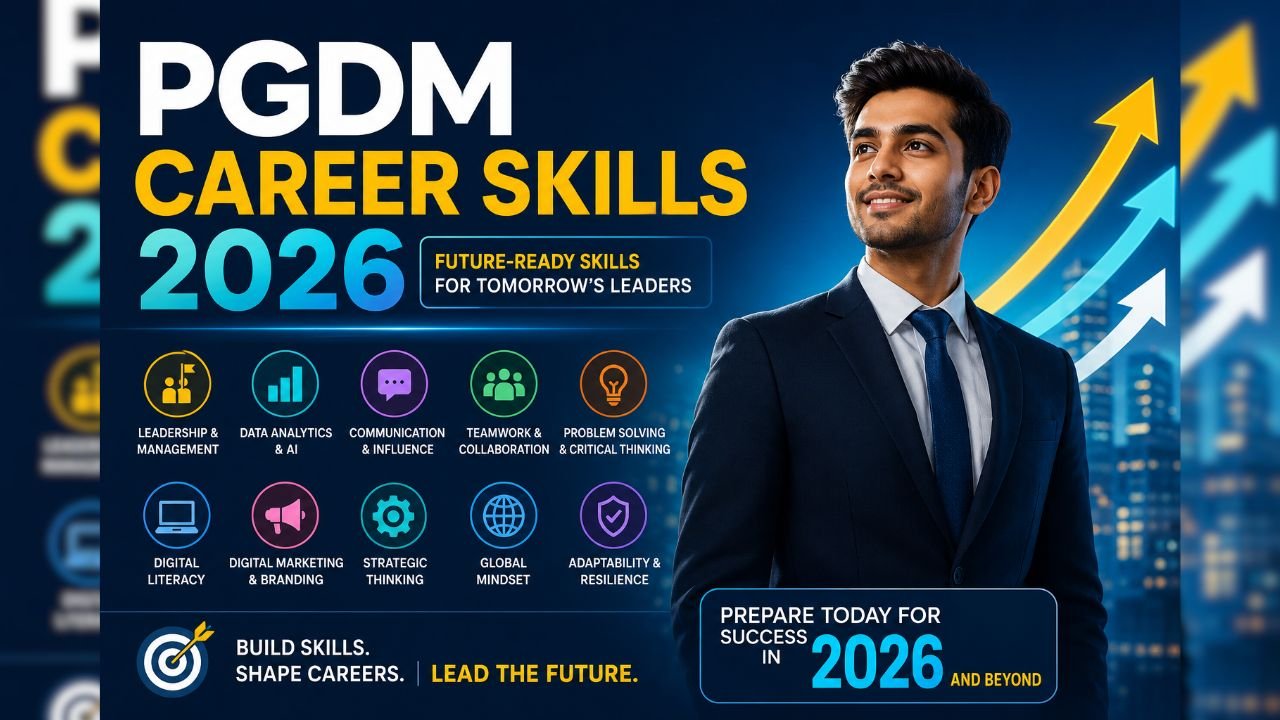
This shift has made PGDM career skills more important than ever before.
Modern organizations want management graduates who are not only academically capable but also industry-ready, emotionally intelligent, analytical, and adaptable. Companies now value individuals who can apply their learning in real business situations instead of simply memorizing concepts from textbooks.
Let’s understand the key qualities recruiters genuinely look for in modern PGDM graduates.
PGDM Career Skills Recruiters Value Most
1. Data-Driven Decision Making
We live in a world where almost every business decision is backed by data. From marketing campaigns to financial planning, companies rely heavily on insights and analytics.
This is why recruiters today actively search for candidates who can understand and interpret data instead of simply collecting it.
Whether a student belongs to marketing, finance, HR, operations, or business analytics, the ability to make informed decisions using data has become one of the most valuable employability skills.
Recruiters appreciate candidates who can:
- Analyze trends and patterns
- Use tools like Excel or Power BI
- Present logical insights
- Support decisions with data
- Solve business challenges practically
Real-World Example
Imagine a digital marketing executive managing an online campaign. Instead of guessing what works, they analyze customer behavior, click-through rates, and conversion data to improve campaign performance.
Similarly, finance professionals use reports and forecasting data to help businesses make smarter investment decisions.
This practical understanding of data makes candidates more valuable in today’s competitive job market.
2. Emotional Intelligence and Workplace Adaptability
Technical knowledge is important, but companies also want professionals who know how to work with people.
Modern workplaces are increasingly collaborative and hybrid. Teams often work remotely across different cities, countries, and time zones. In such environments, emotional intelligence becomes a critical leadership skill.
Recruiters prefer candidates who can:
- Communicate professionally
- Work effectively in teams
- Handle pressure calmly
- Resolve conflicts maturely
- Adapt quickly during uncertainty
- Understand team dynamics
A management graduate who can maintain professionalism during stressful situations is often considered more valuable than someone who only performs well academically.
Real-World Example
Suppose a project team is facing internal disagreements during a product launch. A professional with strong emotional intelligence can listen carefully, manage emotions calmly, and guide the team toward solutions without creating further conflict.
These human-centered leadership qualities are becoming increasingly important in modern organizations.
Being emotionally aware is no longer just a personality trait — it is now one of the most important PGDM career skills recruiters value.
3. Industry Readiness: The “Day One” Mindset
One of the biggest recruiter expectations from MBA and PGDM students today is industry readiness.
Companies want candidates who can contribute from the very first day of joining. Recruiters are actively searching for students who already have practical exposure through internships, live projects, workshops, certifications, and business simulations.
Academic knowledge builds foundations, but practical exposure builds confidence.
Students who actively participate in internships often develop:
- Better communication skills
- Professional confidence
- Business understanding
- Leadership qualities
- Real-world problem-solving ability
Real-World Example
A student who completes a serious internship in digital marketing learns how campaigns actually run in the industry. They understand client expectations, deadlines, reporting structures, and business communication.
This practical experience makes them far more prepared for corporate life than someone who only studied theoretical concepts.
This is exactly why recruiters value industry-ready management students.
4. Strategic Problem-Solving Skills
Every organization faces challenges. Managers are expected to analyze situations, think critically, and make decisions that benefit the business.
This is why strategic thinking and problem-solving have become essential PGDM career skills.
During interviews, recruiters often ask situation-based questions or case studies not to find “perfect answers,” but to understand how candidates think.
They evaluate:
- Decision-making ability
- Analytical thinking
- Communication clarity
- Logical reasoning
- Risk assessment skills
- Confidence under pressure
Real-World Example
Imagine a company suddenly facing supply chain delays. A strong management professional must quickly analyze alternatives, evaluate risks, communicate with stakeholders, and make practical business decisions under pressure.
This ability to think strategically often separates exceptional candidates from average ones.
As AI and automation continue to handle repetitive tasks, human problem-solving and decision-making skills are becoming even more valuable.
“In a world where technology can do the thinking, the true value of a leader is not in knowing the right answers, but in asking the right questions.”
— Satya Nadella, CEO of Microsoft
How PGDM Students Can Build These Skills
The good news is that these skills can be developed during the PGDM journey itself.
Students can become more industry-ready by:
- Participating actively in internships
- Working on live business projects
- Improving communication skills
- Learning analytical tools
- Attending workshops and seminars
- Joining case-study competitions
- Reading business news regularly
- Taking online certifications
- Building leadership experiences through teamwork
The more practical exposure students gain, the more confident and employable they become.
The Future of Career Success
The future workplace will not belong only to students with the highest marks. It will belong to professionals who can combine knowledge with adaptability, emotional intelligence, strategic thinking, and practical execution.
Recruiters today are hiring people who can:
- Solve business problems
- Communicate effectively
- Collaborate with teams
- Think critically
- Learn continuously
- Adapt confidently to change
This shift is transforming the meaning of management education itself.
Conclusion
A marksheet may help you get noticed, but your mindset, practical exposure, and professional skills determine how far you grow in your career.
The modern corporate world values individuals who can think strategically, communicate effectively, solve real-world challenges, and contribute confidently from day one.
At JKBS, students are encouraged to move beyond classroom learning through internships, workshops, industry interaction, live projects, and skill-based learning opportunities that prepare them for long-term success.
Because in today’s world, success belongs to those who go beyond just grades.
FAQs
What are the most important PGDM career skills recruiters look for?
Recruiters value analytical thinking, communication skills, emotional intelligence, strategic problem-solving, leadership qualities, and industry readiness.
Why is emotional intelligence important for management students?
Emotional intelligence helps professionals manage teams effectively, resolve workplace conflicts, communicate better, and adapt to challenging situations.
How can PGDM students become industry-ready?
Students can become industry-ready through internships, live projects, workshops, certifications, networking, and practical business exposure.
Are grades enough for placements?
Good grades help students secure interview opportunities, but recruiters also evaluate practical skills, communication ability, leadership qualities, and problem-solving skills.
Why are data skills important in management careers?
Data skills help professionals make informed business decisions, analyze trends, improve performance, and solve business problems effectively.