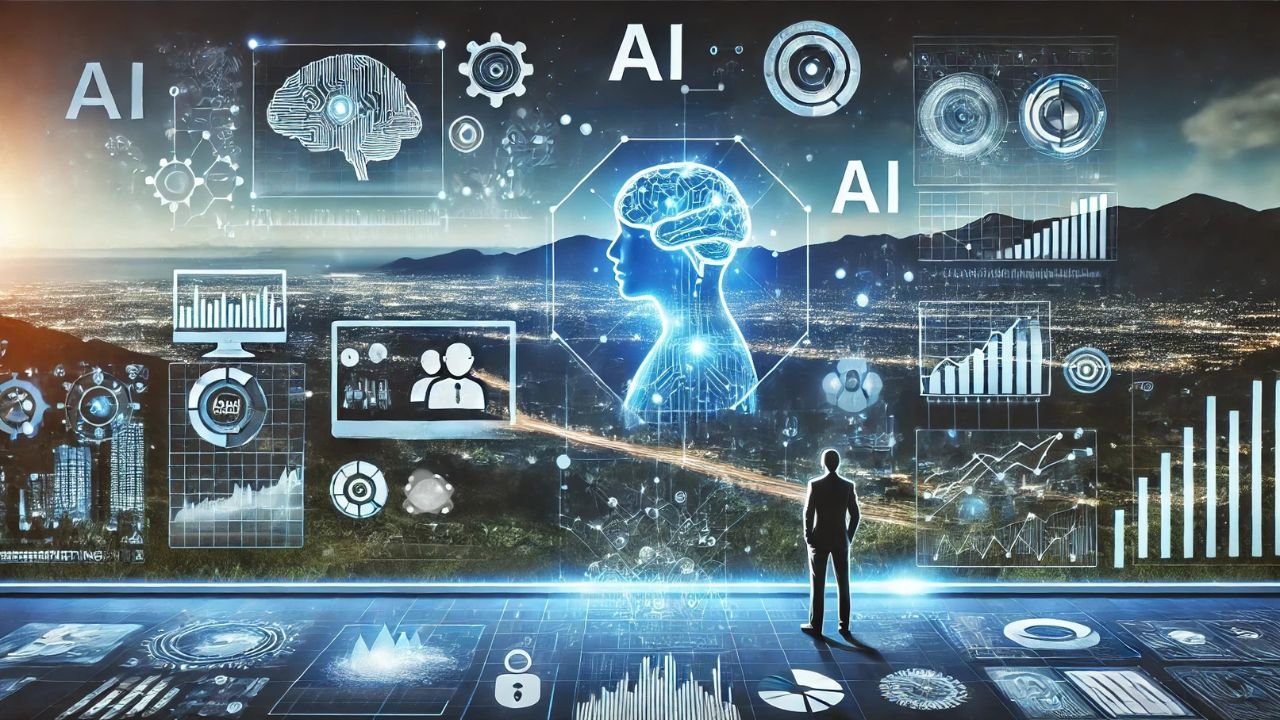
Marketing today looks very different from what it was a decade ago. With the rise of Artificial Intelligence (AI), brands are no longer relying only on intuition or traditional strategies. Instead, they are using data, automation, and intelligent systems to understand consumers better and engage with them more effectively.
AI has transformed the way businesses interact with their audience. From personalized recommendations to automated customer support, it has made marketing faster, smarter, and more efficient. As competition continues to grow, companies are increasingly adopting AI-driven strategies to stay relevant and build stronger connections with their customers.
How AI is Transforming Marketing Strategies
AI is not just a trend—it is reshaping the core of marketing. Here are some of the key ways it is making an impact:
1. Personalization at Scale
One of the biggest advantages of AI in marketing is its ability to deliver personalized experiences to a large audience.
Earlier, personalization was limited and often manual. Today, AI can analyze customer data such as browsing behavior, purchase history, and preferences to create highly tailored experiences. Whether it is product recommendations, email campaigns, or targeted ads, everything can be customized for each individual.
Platforms like Amazon and Netflix have set strong examples by using recommendation engines that suggest products or content based on user behavior. This not only improves engagement but also increases conversion rates.
For marketers, this means moving beyond generic messaging and focusing on delivering value to each customer in a more relevant way.
2. Chatbots and AI-Powered Customer Support
Customer expectations have changed significantly. People now expect quick responses and seamless interactions.
AI-powered chatbots have made it possible for businesses to provide 24/7 customer support without increasing operational costs. These chatbots can handle common queries, guide users through the buying process, and even resolve basic issues instantly.
Brands like Sephora and H&M have successfully integrated chatbots into their platforms, improving customer experience and response time. This not only enhances satisfaction but also allows human teams to focus on more complex tasks.
As AI continues to evolve, chatbots are becoming more conversational and capable of handling advanced interactions.
3. Predictive Analytics in Consumer Behavior
Understanding what a customer might do next is one of the most valuable aspects of marketing. AI makes this possible through predictive analytics.
By analyzing large volumes of data, AI can identify patterns and predict future behavior. This helps marketers target the right audience at the right time with the right message.
For example, tools like Google Analytics and HubSpot use AI to track user behavior and provide insights that help optimize campaigns. Marketers can use this data to improve targeting, reduce costs, and increase ROI.
Predictive analytics also helps in identifying potential leads, improving customer retention, and planning future strategies more effectively.
4. AI in Content Creation and SEO
Content remains a key part of digital marketing, and AI is now playing a major role in how it is created and optimized.
AI tools such as ChatGPT, Jasper, and SurferSEO assist marketers in generating content ideas, writing copy, and optimizing content for search engines. These tools help save time while maintaining quality and consistency.
AI also helps in keyword research, content optimization, and performance tracking. This ensures that content reaches the right audience and ranks better on search engines.
However, while AI can support content creation, the human element—creativity, storytelling, and emotional connection—remains essential.
Why AI Matters for Modern Marketers
AI is not just about technology—it is about improving decision-making and enhancing customer experiences.
For marketers, this means:
- Better understanding of customer needs
- More efficient campaign management
- Improved targeting and personalization
- Faster response times and automation
In a highly competitive market, these advantages can make a significant difference. Businesses that adopt AI early are better positioned to adapt to changing consumer behavior and market trends.
How JK Business School Prepares Students for AI-Driven Marketing
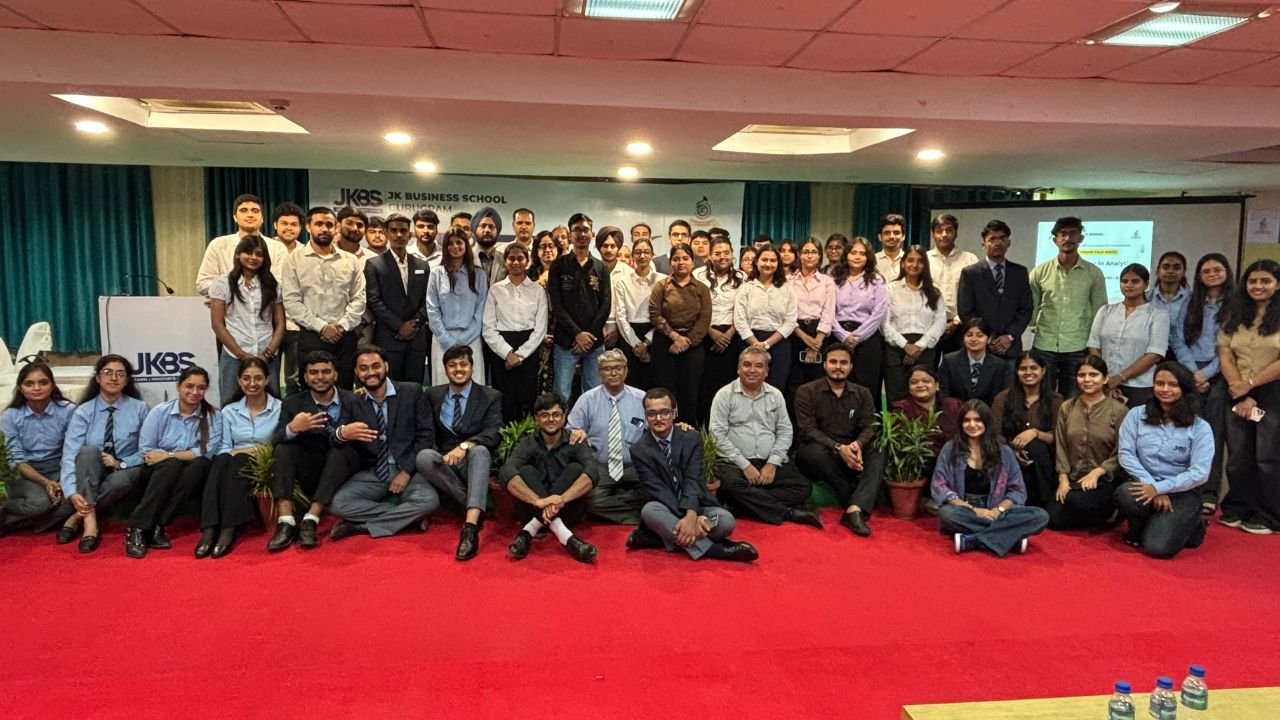
As AI continues to shape the future of marketing, it is important for students to be prepared for this shift. JK Business School (JKBS), Gurugram, focuses on equipping students with the skills and knowledge required to succeed in this evolving landscape.
Industry-Aligned Curriculum
The marketing specialization in the PGDM program at JKBS includes key areas such as digital marketing, data analytics, and AI-driven tools. The curriculum is designed to match current industry requirements, ensuring that students are learning what companies actually need.
Hands-On Learning and Practical Exposure
At JKBS, learning goes beyond theory. Students get hands-on experience with tools like Google Analytics, SEMrush, and Salesforce through workshops and live projects.
This practical exposure helps students understand how AI is applied in real marketing scenarios, making them more confident and job-ready.
Learning Through Case Studies and Industry Insights
Real-world case studies play an important role in understanding how AI is used by leading companies. At JKBS, students analyze successful marketing campaigns and learn how AI-driven strategies have been implemented across industries.
This approach helps bridge the gap between classroom learning and real business challenges.
Also Read: Business Analytics: The Key Skill Every Future Manager Needs
The Future of AI in Marketing
AI is still evolving, and its role in marketing is expected to grow even further.
In the coming years, we can expect:
- More advanced personalization
- Better voice and visual search capabilities
- Increased use of automation in campaigns
- Deeper integration of AI across all marketing channels
For marketers, staying updated with these trends is essential. The ability to combine data-driven insights with creative thinking will define success in the future.
Final Thoughts
AI has brought a major shift in how brands connect with their audience. It has made marketing more precise, efficient, and customer-focused.
However, technology alone is not enough. The real impact comes when AI is used thoughtfully to create meaningful and engaging experiences.
For students and professionals entering the field, understanding AI is no longer optional—it is a necessity. With the right knowledge and practical exposure, they can use AI to create strategies that not only drive business growth but also build lasting customer relationships. Institutions like JK Business School support this journey by providing industry-focused learning and hands-on exposure to AI-driven marketing tools.