Introduction
Every year, lakhs of students across India prepare for management entrance exams like CAT, XAT, CMAT, SNAP, and NMAT. Most students believe their percentile will decide their future success.
But once students enter a PGDM classroom, they discover a different reality.
The students who stand out during their management journey are often not the ones with the highest scores. They are the students who communicate clearly, present ideas confidently, and interact professionally.
According to LinkedIn Global Talent Trends, communication remains one of the most in-demand workplace skills globally. Similarly, the National Association of Colleges and Employers (NACE) consistently ranks communication among the top skills recruiters expect from graduates.
This is why communication skills in PGDM play a critical role in classroom performance, internships, placements, leadership opportunities, and long-term career growth.
Table of Contents
- Why Communication Skills Matter in PGDM
- Communication Skills for Placements
- Soft Skills for PGDM Students
- Leadership Skills in PGDM
- How to Improve Communication Skills
- FAQ Section
Why Communication Skills in PGDM Matter
Business schools are designed around presentations, group discussions, case studies, and teamwork.
Unlike traditional education systems focused mainly on written exams, PGDM programs reward participation and practical interaction.
Faculty members observe:
- How students communicate ideas
- How professionally they interact
- How confidently they present
- How effectively they work in teams
Students who actively participate often learn faster because they engage with real-world business situations and multiple perspectives.
Management is not a silent profession. Companies hire professionals who can solve problems and communicate solutions clearly.
Communication Skills in PGDM for Placements
One of the biggest realities students discover during placement season is that recruiters evaluate much more than technical knowledge.
During interviews, companies observe:
- Confidence level
- Clarity of thought
- Conversational ability
- Emotional maturity
- Problem-solving communication
A student may know the correct answer technically, but hesitation and unclear communication can reduce impact immediately.
According to the NACE Job Outlook Report, employers consistently rank verbal communication among the top employability skills while hiring graduates.
Technical knowledge can be trained later. Poor communication habits are much harder to fix in fast-paced corporate environments.
Soft Skills for PGDM Students
Communication is not only about speaking fluently.
Soft skills for PGDM students also include:
- Active listening
- Team collaboration
- Conflict management
- Structured thinking
- Professional behaviour
- Emotional intelligence
Many students underestimate these skills during the early phase of their management journey. However, during internships and team projects, soft skills become equally important as academic knowledge.
Leadership Skills in PGDM
Leadership begins with communication.
Students who communicate effectively naturally become more visible during:
- Group projects
- Presentations
- Competitions
- Internship activities
- Campus committees
People trust clarity, confidence, and professionalism. This is why leadership skills in PGDM are strongly connected with communication ability and interpersonal effectiveness.
How to Improve Communication Skills in PGDM
Students can improve communication skills gradually through consistent practice.
Practical ways include:
- Participating in classroom discussions
- Practicing presentations regularly
- Reading business articles
- Improving body language
- Recording and reviewing speaking style
- Speaking English daily without fear
Communication is not about speaking fancy English. It is about clarity, confidence, and connection.
FAQ Section
- Q1. Why are communication skills important in PGDM?
Ans. Communication skills help students perform better in presentations, placements, internships, teamwork, and leadership activities. - Q2. How can PGDM students improve communication skills?
Ans. Students can improve by participating in discussions, practicing presentations, reading regularly, and improving confidence through daily communication practice. - Q3. Do recruiters value communication skills more than academic scores?
Ans. Recruiters value both, but communication skills often create stronger first impressions during interviews and group discussions. - Q4. What are the most important soft skills for PGDM students?
Ans. Important soft skills include communication, teamwork, leadership, emotional intelligence, and problem-solving ability. - Q5. Why are communication skills important for placements?
Ans. Communication skills help students express ideas clearly, answer interview questions confidently, and interact professionally with recruiters.
Final Thoughts
Entrance exams may help students secure admission into a PGDM program, but communication skills shape everything that follows.
They influence classroom participation, internships, networking, placements, and leadership opportunities.
Long after entrance scores are forgotten, students are remembered for how they communicate, collaborate, and present themselves professionally.
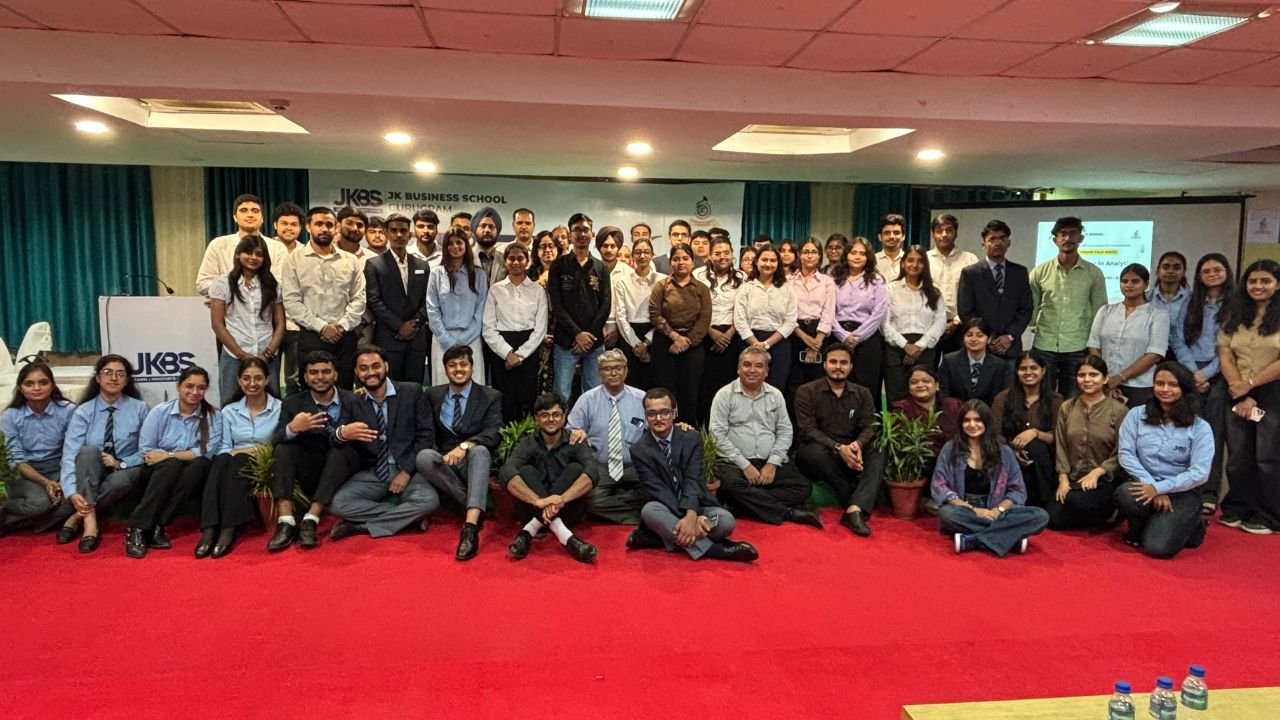
At JK Business School, communication development is integrated into presentations, industry interaction, teamwork, and placement preparation so students become industry-ready management professionals.