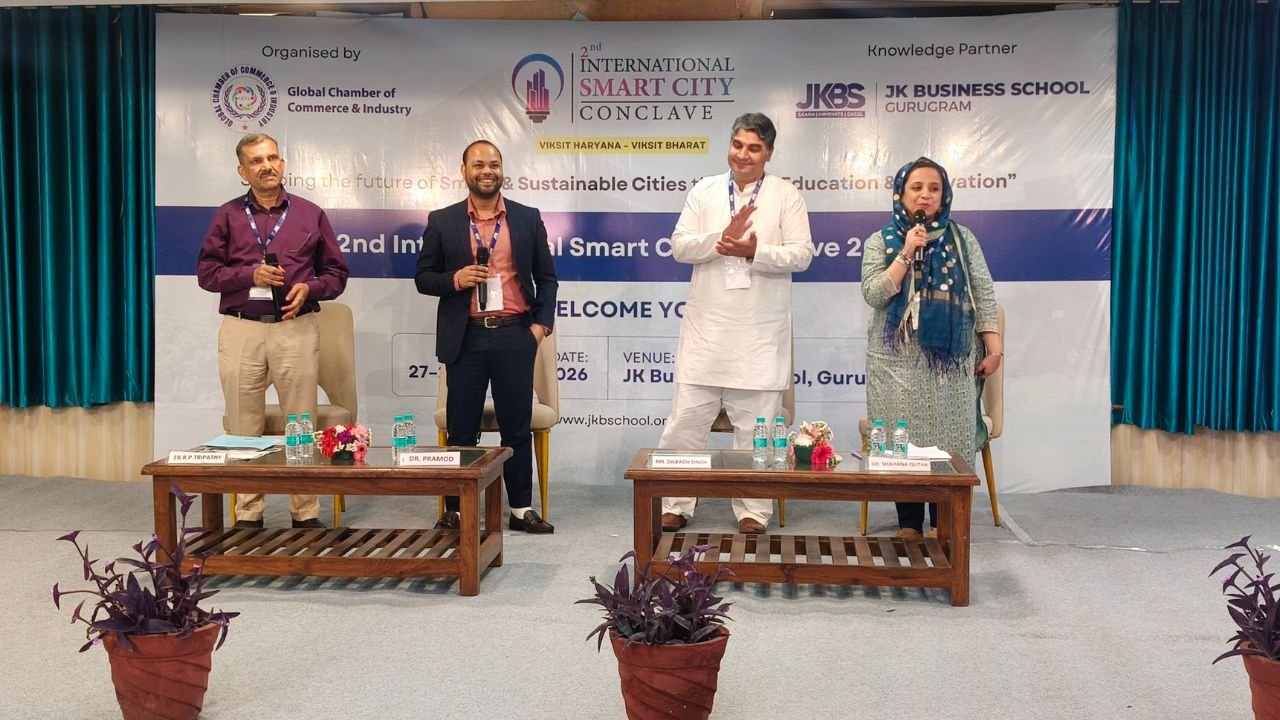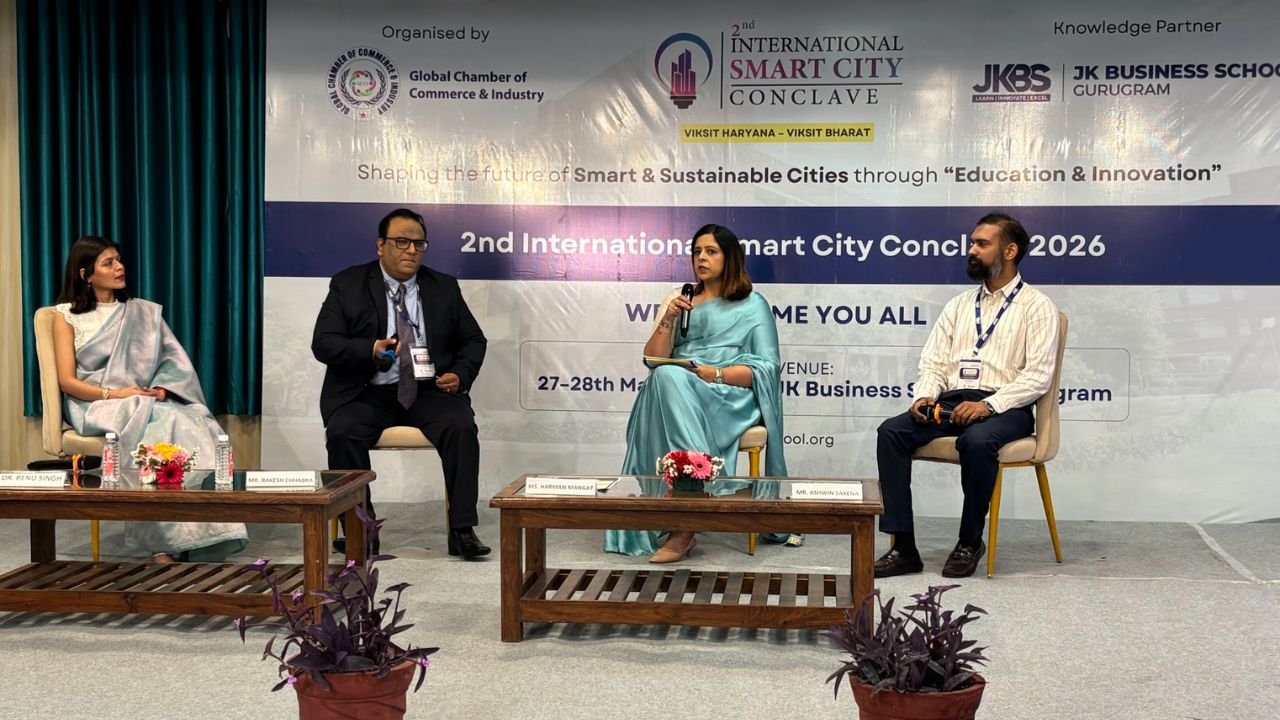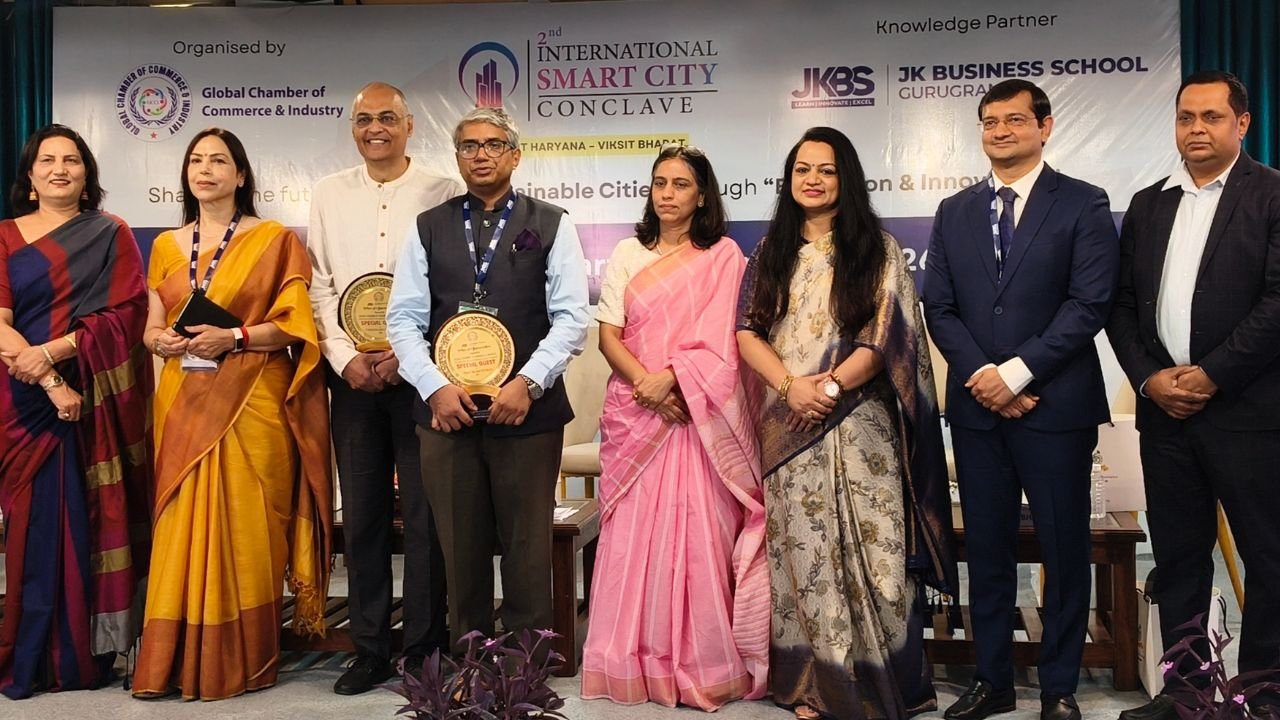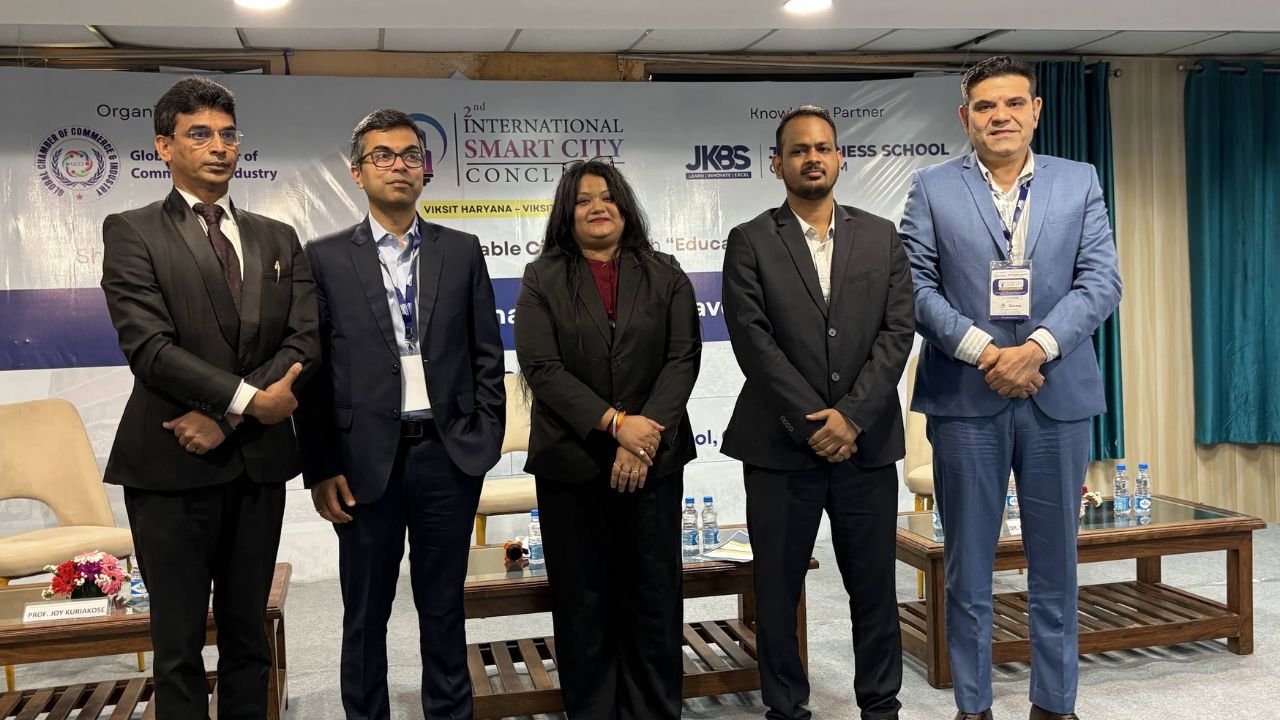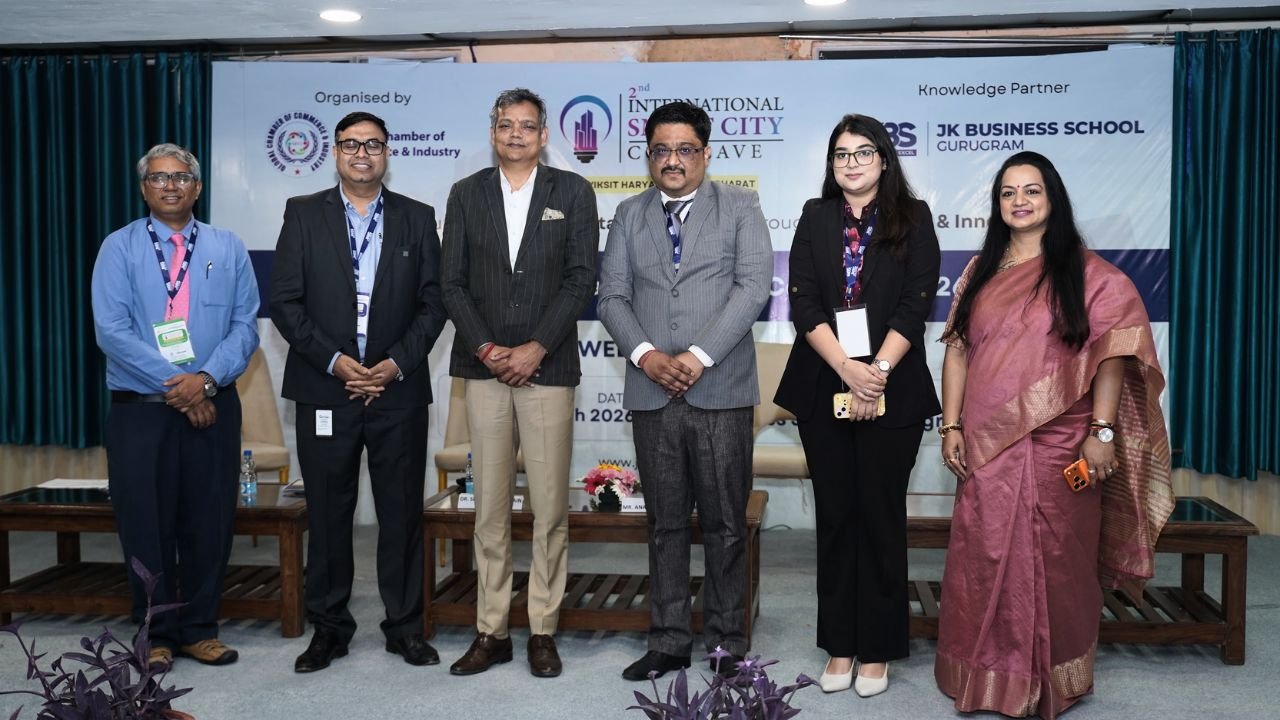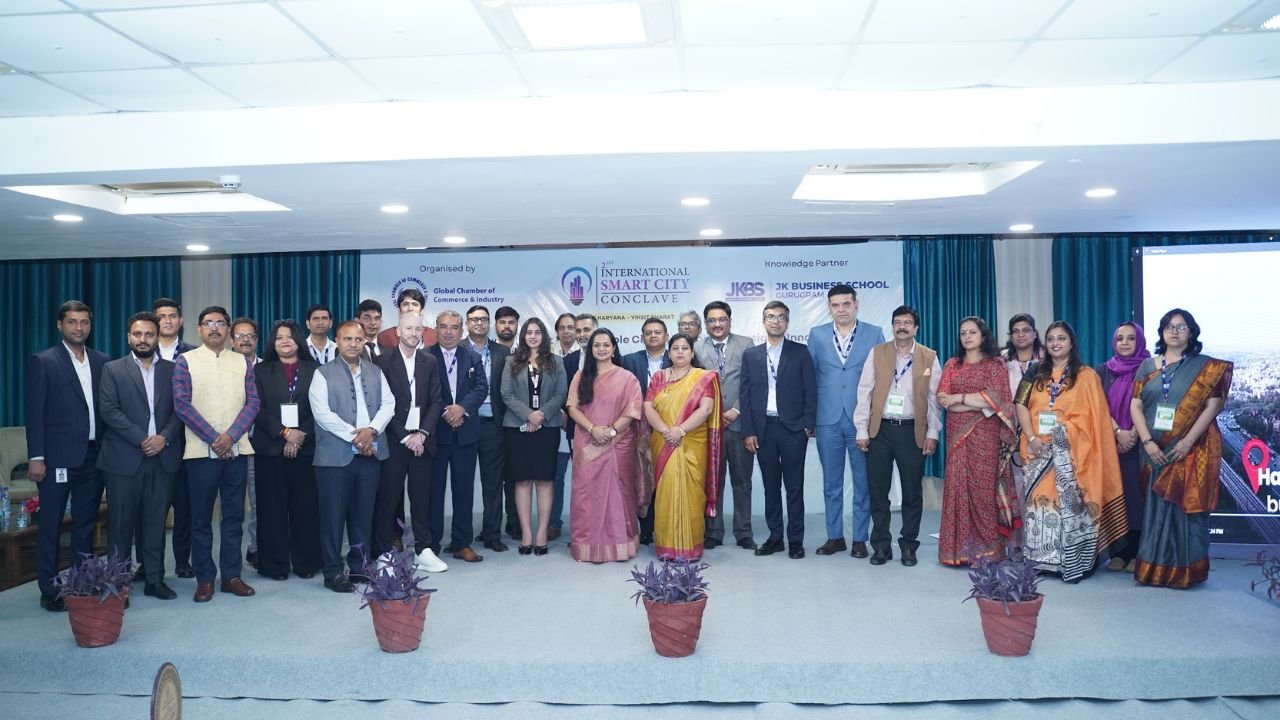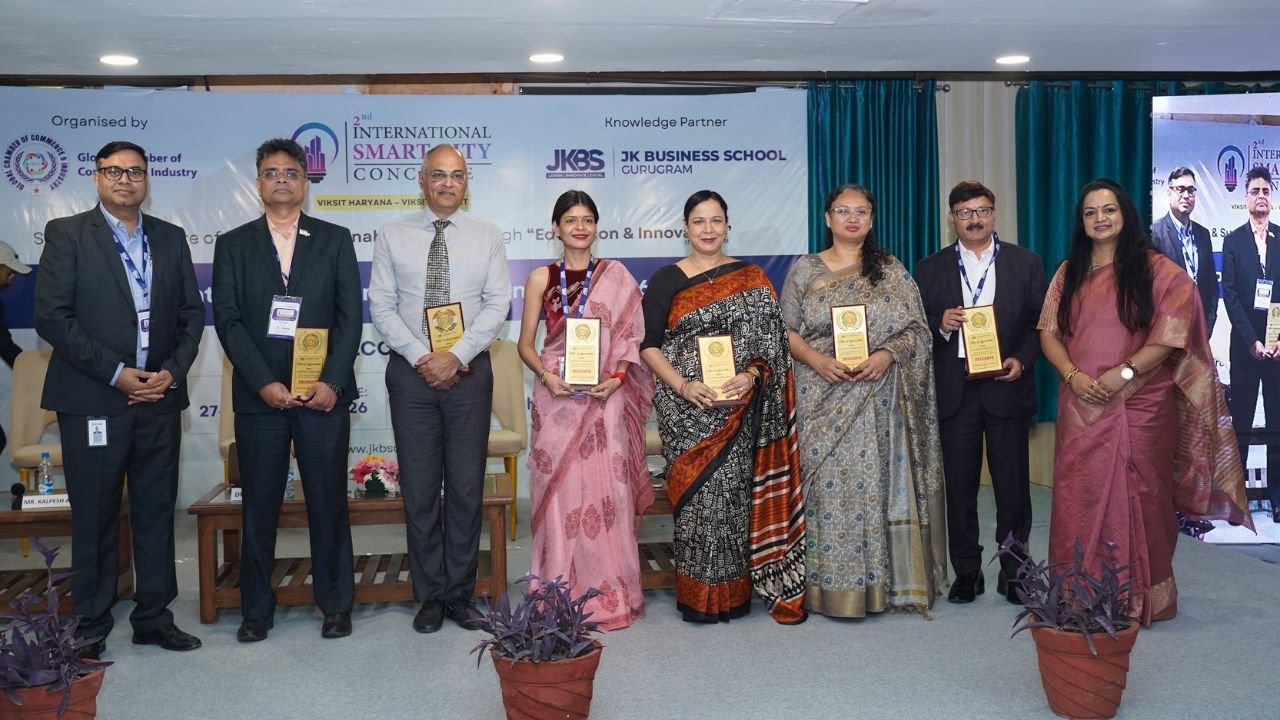
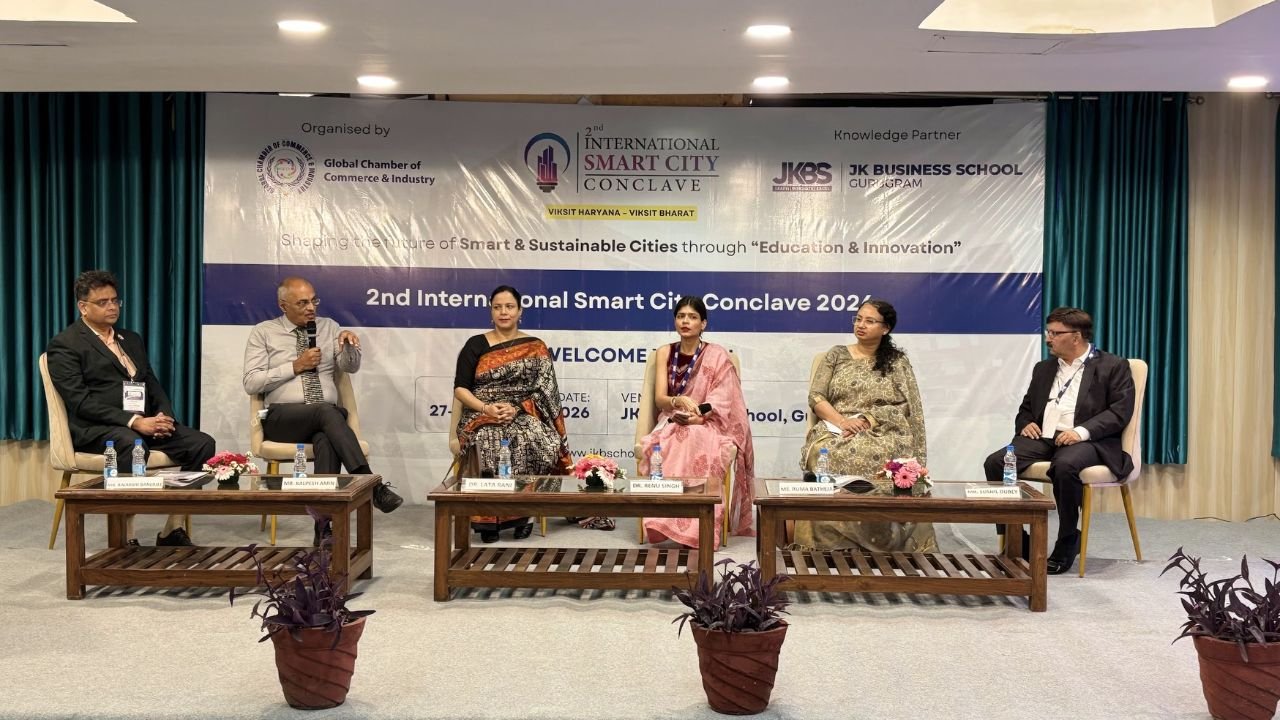
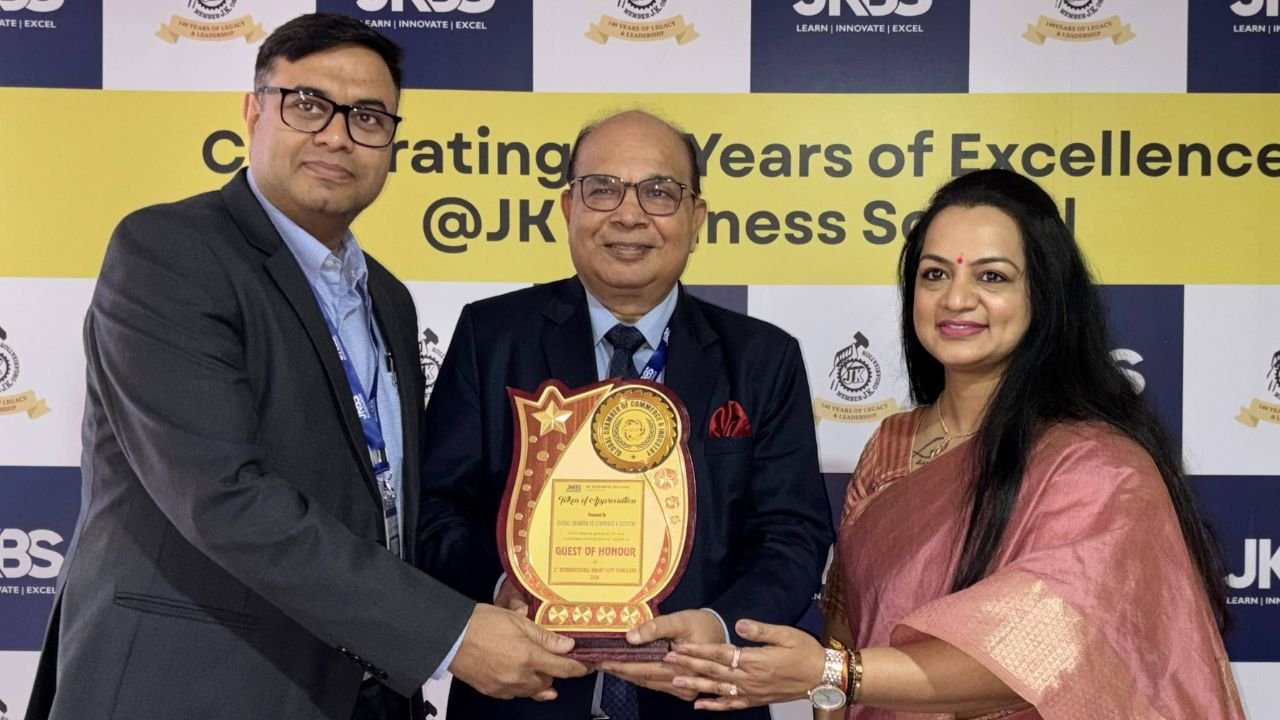
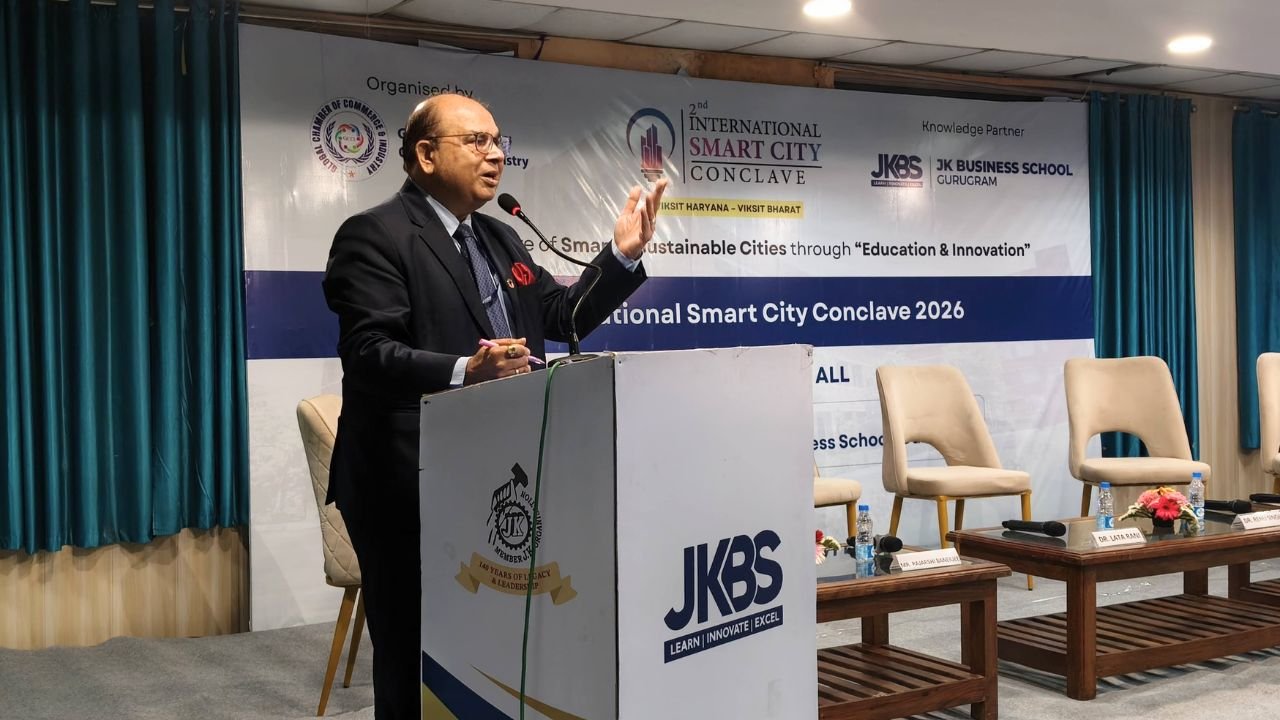
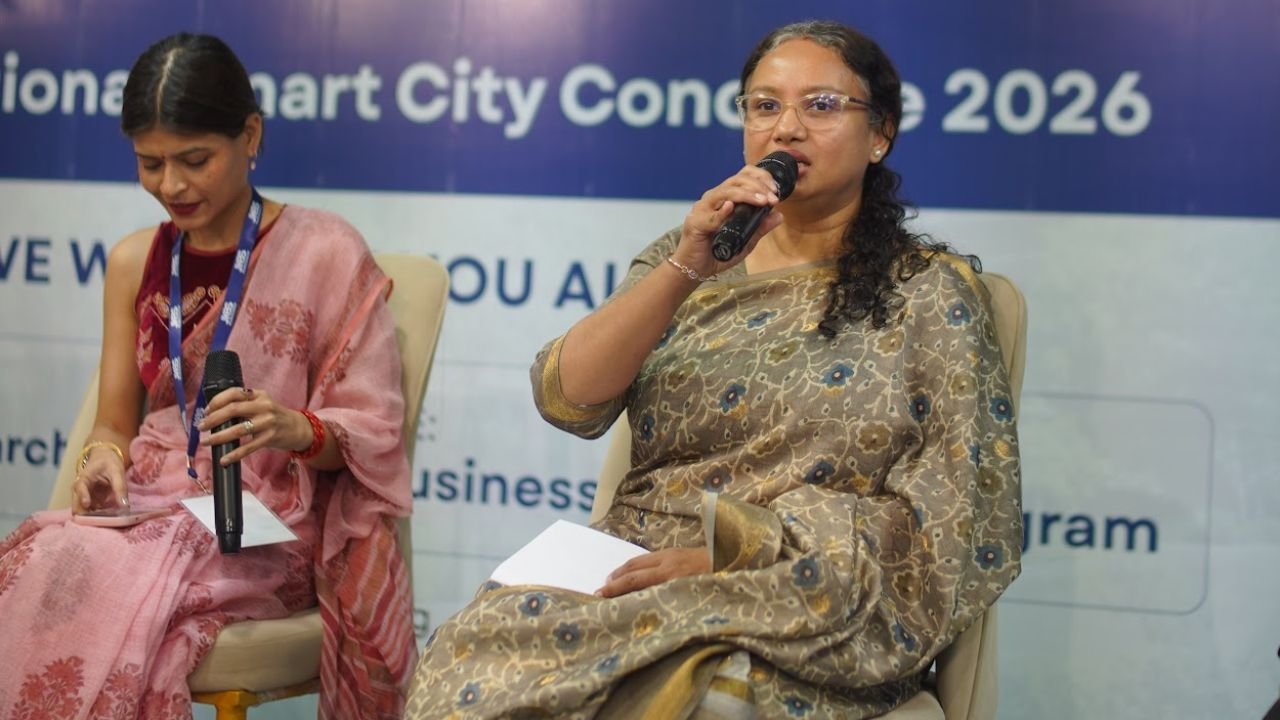
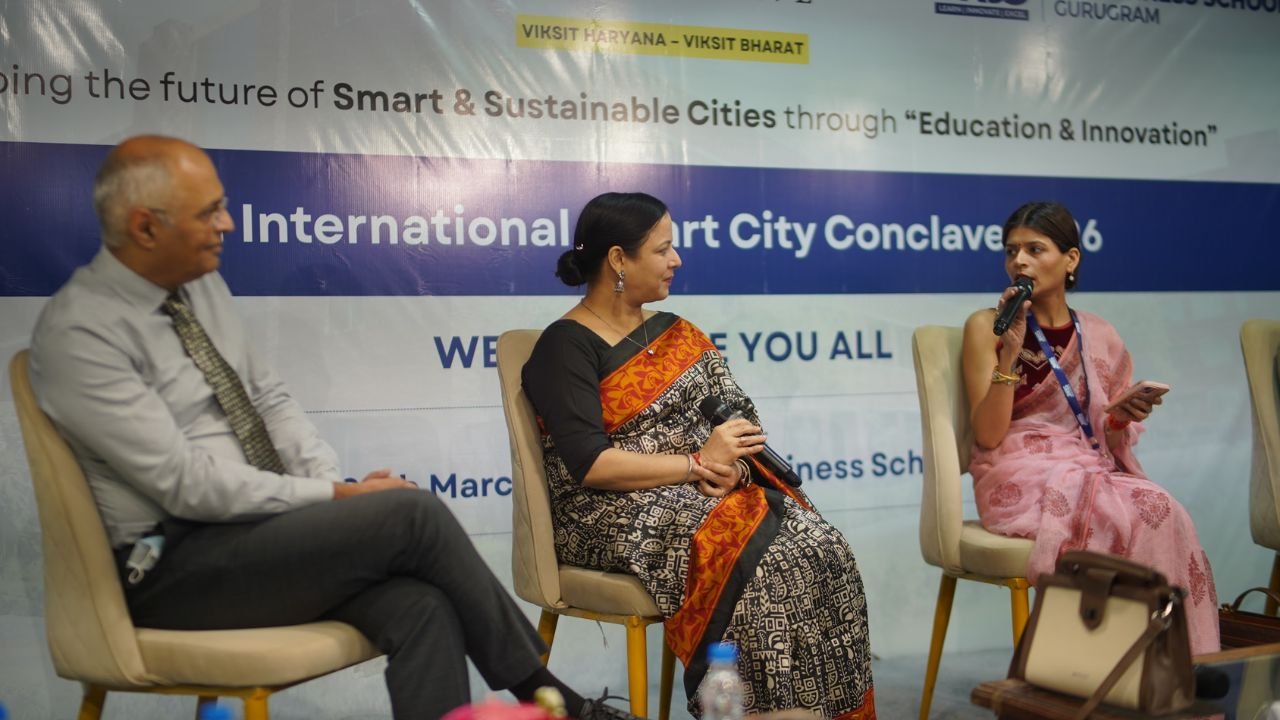
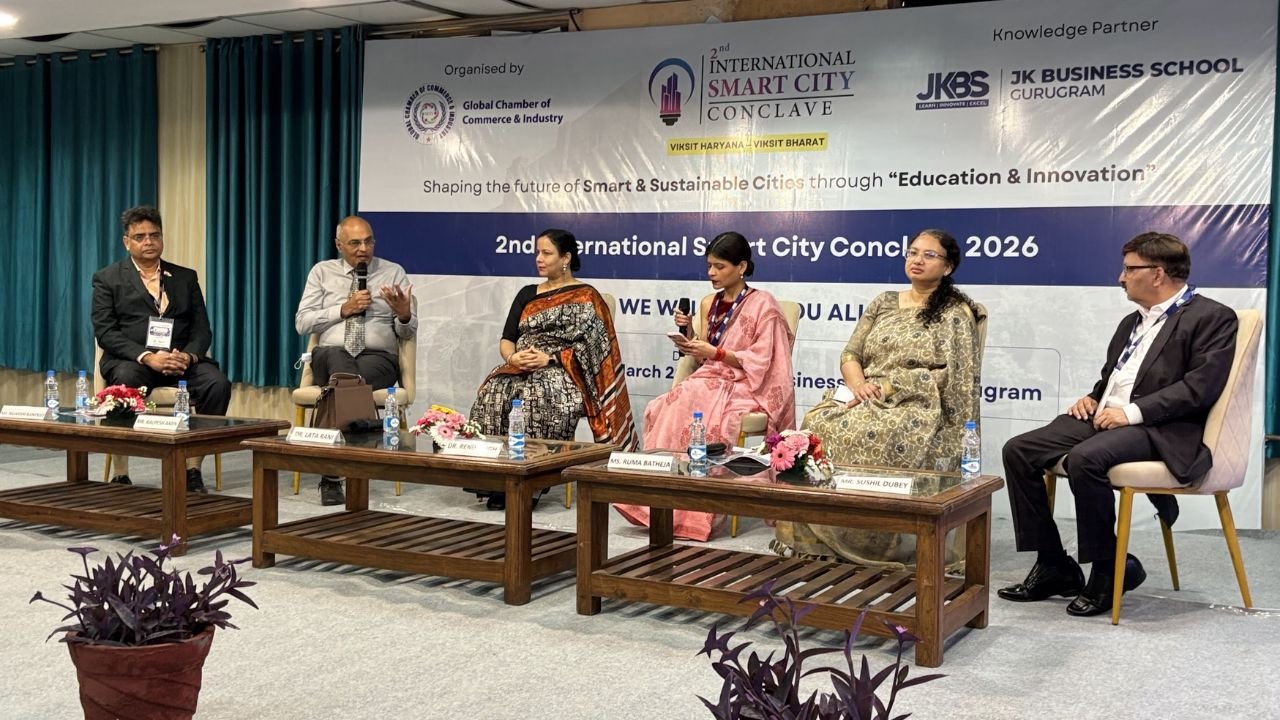
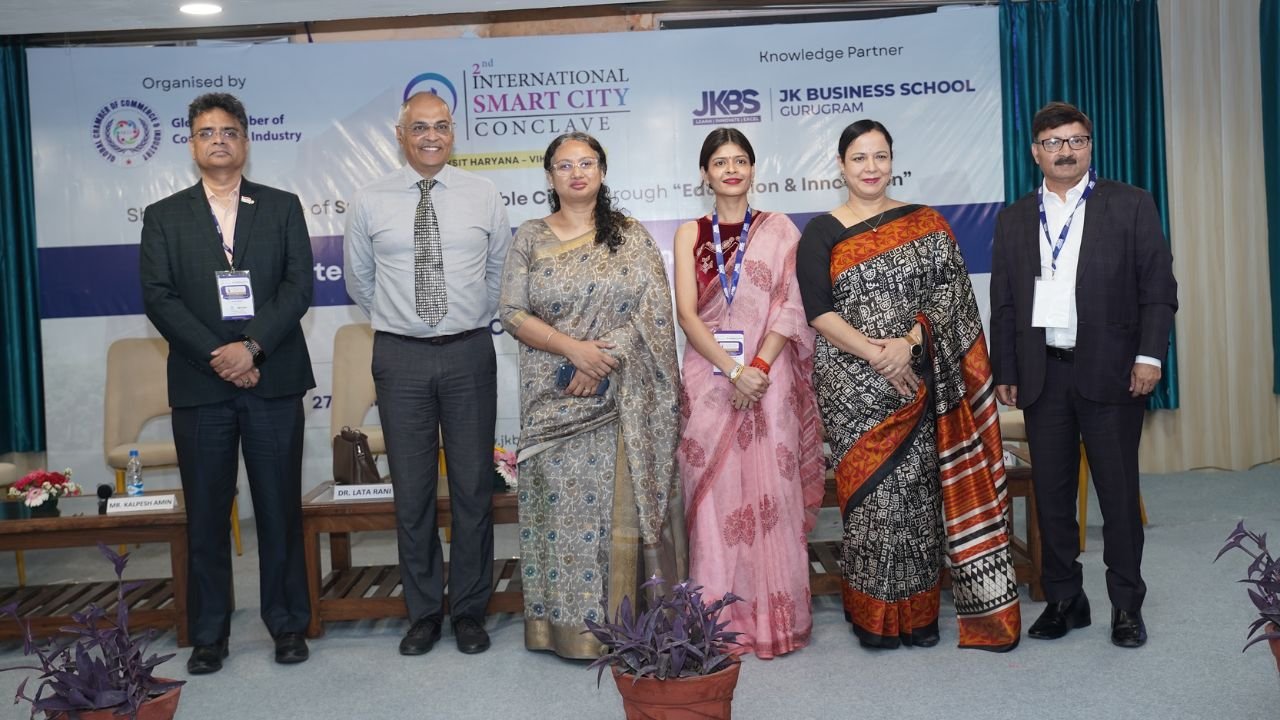
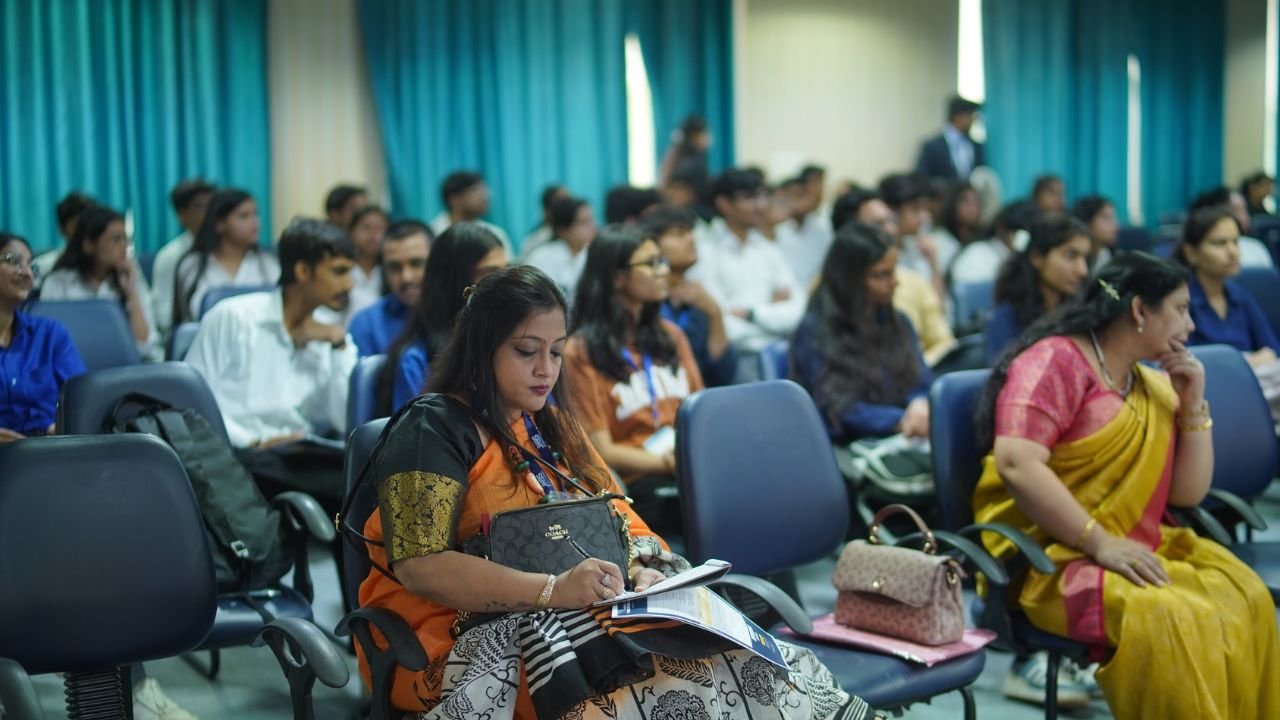
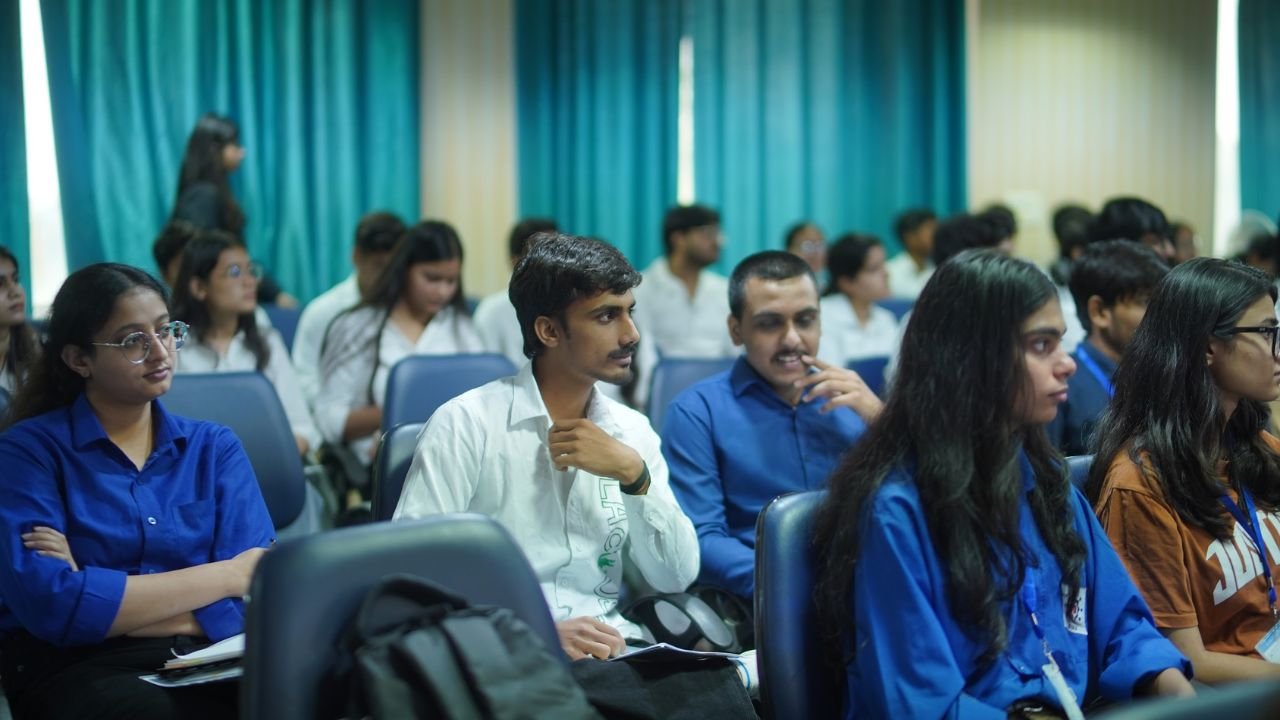
At the 2nd International Smart City Conclave 2026, hosted at JK Business School, Gurugram (JKBS), thought leaders, policymakers, and industry experts came together to discuss one of the most critical themes shaping modern India: Smart Cities and Sustainable Urban Development.
Session 1, titled “Smart Cities, Sustainable Futures: Assessing India’s Urban Transformation Journey”, set the tone for the conclave by focusing on how innovation, governance, and sustainability are driving urban transformation across the country.
Held on 27th March 2026, the session brought together a diverse panel of experts who shared practical insights, industry perspectives, and forward-looking ideas.
Distinguished Speakers
The session featured an accomplished panel of leaders from industry and academia:
- Dr. Sushil Aggarwal, Chairman, Avro Recycling Ltd
- Mr. Kalpesh Amin, Burlington English
- Dr. Lata Rani, Associate Professor, DSEU
- Ms. Ruma Batheja, Partner, Knowledgetics Research
- Mr. Rajarshi Banerjee, Chief Business Officer – Banking, LeadsConnect
- Mr. Sushil Dubey, CEO, Urja Global Limited
- Dr. Renu Singh, Sr. Trainer, Fintech, ISDC Global
- Dr. Sukhamaya Swain, Professor, JK Business School, Gurugram
Each speaker brought a unique perspective, ranging from policy frameworks and financial ecosystems to sustainability practices and digital transformation in urban development.
Key Discussion Highlights
The session explored how India’s cities are evolving through:
1. Innovation-led Urban Development
Speakers emphasized the role of technology, digital infrastructure, and smart governance systems in transforming urban spaces into efficient, citizen-centric ecosystems.
2. Sustainability as a Core Strategy
Sustainable practices are no longer optional. The discussion highlighted how environmental responsibility is becoming central to urban planning, energy use, and infrastructure development.
3. Governance and Policy Integration
Strong collaboration between government bodies, private sector players, and academic institutions is essential to drive scalable and impactful urban solutions.
4. Financial and Digital Ecosystems
The role of fintech, data-driven decision-making, and investment frameworks was highlighted as a key enabler for smart city initiatives.
Impactful Conversations and Insights
From keynote perspectives to engaging panel discussions, the session provided a comprehensive view of how India’s urban future is being shaped by innovation, leadership, and sustainability-driven thinking.
It also reinforced the importance of platforms like the International Smart City Conclave in fostering dialogue between academia and industry, aligning perfectly with JK Business School, Gurugram’s commitment to industry-integrated learning.
The JKBS Edge
At JK Business School, Gurugram, such initiatives reflect the institution’s focus on preparing students for real-world challenges. Through conclaves, industry interactions, and experiential learning, JKBS continues to build future-ready leaders equipped to contribute to evolving sectors like smart infrastructure, sustainability, and digital transformation.
Backed by the 141+ years legacy of the JK Organisation, JKBS stands as The perfect Eco-Centre of Success, bridging academic excellence with industry relevance.
Session 1 of the conclave successfully laid the foundation for deeper discussions by addressing critical questions around urban transformation. It highlighted a clear message:
The future of cities lies at the intersection of innovation, sustainability, and collaborative leadership.