One of the most debated questions among graduating students in India is: Should I pursue an
MBA immediately after my bachelor’s degree, or should I work for a few years first? This question has no single right answer; the best path depends on your career goals, financial situation, industry preference, and personal readiness.
In 2026, the business education landscape has evolved significantly. With specialised PGDM programmes, industry-integrated curricula, and AI-driven learning, even freshers can make the most of a business school education. This guide walks you through both paths with their advantages, challenges, and ideal candidate profiles, so you can make an informed choice.
MBA Directly After Graduation: The Case For Going Early
Pursuing an MBA right after your bachelor’s degree, often called a “fresher MBA,” has grown increasingly popular in India. Here’s why many students opt for this route:
1. Continuous Academic Momentum
Transitioning straight from a bachelor’s to an MBA keeps you in the academic mindset. You are already accustomed to studying, managing deadlines, and learning new concepts rapidly. This mental momentum can be a genuine advantage in a rigorous MBA programme.
2. Younger Age Advantage in Placements
Many recruiters, especially in sectors like consulting, FMCG, retail, and banking, prefer younger MBA graduates they can mould from an early stage. Starting your MBA at 21–22 can mean entering the corporate world at 23–24, giving you more time to grow within an organisation and reach senior positions earlier.
3. Financial Consideration
If you have strong family support or a scholarship, pursuing an MBA without work experience eliminates the “opportunity cost” of leaving a well-paying job. You invest in your education at a stage when your earning potential is still developing.
4. Ideal for Entrepreneurs
If you plan to launch your own venture, an early MBA equips you with the frameworks, networks, and business acumen you need before you even enter the market. Programmes like the BBA in Entrepreneurship & Leadership also serve as a strong foundation before an MBA.
Related Read: What is a BBA in Entrepreneurship & Leadership and its benefits?
MBA After Work Experience: The Case For Waiting
The traditional advice has always been: “Get some work experience before your MBA.” Here is why that advice still holds weight in 2026:
1. Deeper Contextual Understanding
When you study marketing strategy or organisational behaviour after working in a company for two to three years, the concepts resonate at a completely different level. You can relate classroom discussions to real boardroom decisions you have witnessed or participated in.
2. Better ROI on Your Investment
Experienced MBA graduates typically command significantly higher salaries than freshers. Recruiters value the combination of theoretical knowledge and practical application. Post-experience MBAs often get hired into managerial or senior associate roles, skipping the junior-level ladder entirely.
3. Stronger Application & Admission Prospects
Top business schools, especially those with global rankings, prefer candidates with two to five years of professional experience. Work experience enriches your application with concrete achievements, leadership examples, and industry-specific insights.
4. Clarity of Purpose
After working for a few years, you are far more certain about which specialisation to pursue, whether that is finance, marketing, operations, or an emerging area like AI in business management. This clarity helps you extract maximum value from your MBA programme.
Related Read: Why AI Is the Future of Business Education for MBA Students
Key Differences: Fresher MBA vs Experienced MBA
Let us compare the two paths across the most important parameters:
- Age at Graduation: Fresher MBA graduates at 23–24; Experienced MBA at 26–30
- Industry Exposure: Limited for freshers; substantial for experienced candidates
- Starting Salary: Moderate for freshers; significantly higher for experienced hires
- Networking Quality: Built from scratch; experienced candidates bring existing networks
- Admission Difficulty: Generally easier for freshers at mid-tier colleges; highly competitive for top schools without experience
- Specialisation Clarity: Lower for freshers; higher for experienced candidates
What Does the Indian Job Market Say in 2026?
The Indian job market in 2026 is highly dynamic. Sectors like FinTech, data analytics, digital marketing, supply chain, and AI-integrated businesses are booming. Companies in these sectors are actively hiring MBA graduates from accredited institutions, regardless of prior experience, provided the curriculum is industry-aligned.
AICTE-approved business schools with strong placement cells have demonstrated that even fresher MBA or PGDM graduates can command competitive packages if the institution has strong corporate partnerships and experiential learning.
Which Programme Is Right for You?
Your ideal path also depends on the type of management programme you choose. In India, the PGDM (Post Graduate Diploma in Management) is often preferred over an MBA by many top recruiters because of its more flexible, industry-oriented curriculum. Whether you are a fresher or an experienced professional, a PGDM from a reputed institution can be transformative.
Related Read: Which is the best PGDM course in Delhi NCR for career growth?
JK Business School: Designed for Both Freshers and Professionals
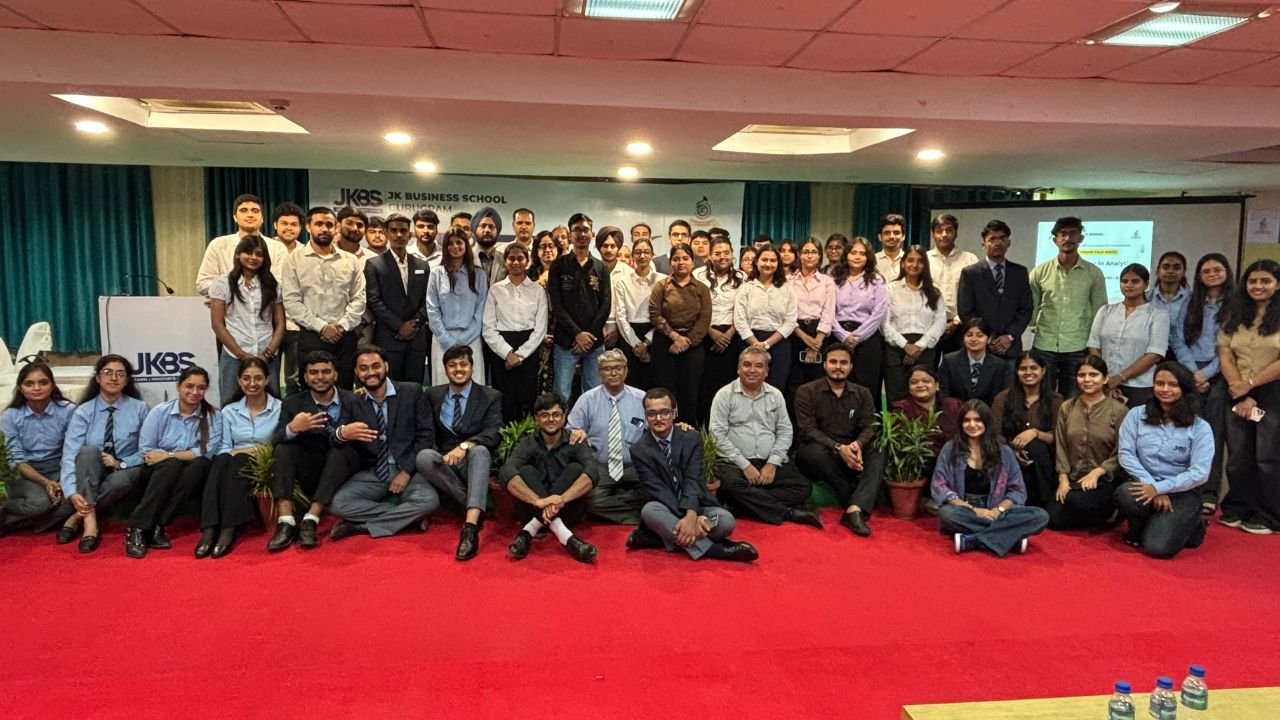
JK Business School (JKBS) in Gurugram is one of the premier PGDM institutions in Delhi NCR. With a 141-year legacy of the JK Organisation behind it, JKBS offers industry-integrated programmes in PGDM, PGDM in Business Analytics, PGDM in HRM, and more. The school’s robust placement record, global partnerships, and AICTE-approved status make it an excellent choice regardless of whether you are a fresher or an experienced professional.
JKBS also focuses heavily on leadership development, soft skills training, live projects, and global immersion, ensuring that every graduate, whether fresh or experienced, enters the corporate world as a confident, skilled business professional.
The debate between MBA after graduation and MBA after work experience ultimately comes down to your individual goals, financial readiness, and industry aspirations. If you have a clear vision and strong academic credentials, an early MBA can launch you ahead of the curve. If you crave depth, better pay, and greater certainty, a few years of work experience can make your MBA investment far more rewarding.
Whatever path you choose, ensure you select an accredited, placement-strong institution with a curriculum aligned to industry needs. The right business school makes all the difference.
Ready to take the next step? Connect with JKBS admissions today and discover the right programme for your career journey.
Conclusion:
Choosing between an MBA immediately after graduation and pursuing it after gaining work experience depends on your career goals, personal readiness, and financial situation. A fresher MBA can provide early exposure, academic momentum, and entrepreneurial advantages, while an MBA after work experience offers deeper industry understanding, higher ROI, and stronger placement opportunities. Regardless of the path, enrolling in an accredited, industry-aligned institution like JK Business School ensures you gain the skills, networks, and practical exposure needed to succeed in India’s dynamic job market. Making an informed choice today sets the foundation for a rewarding management career tomorrow.