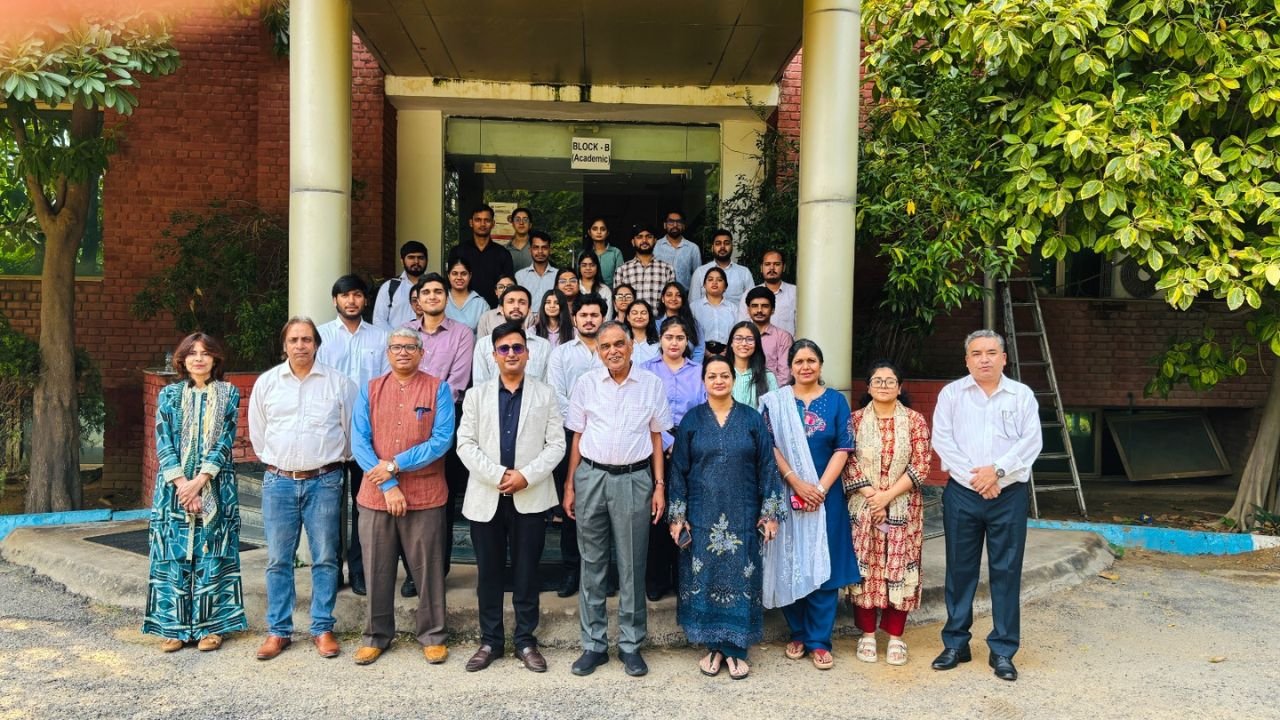

Gurugram, 17 October 2026: Digital transformation is often associated with emerging technologies, automation, artificial intelligence and digital platforms. However, meaningful transformation goes far beyond adopting new tools. It involves rethinking business strategies, improving processes, creating customer value and enabling organisations to respond effectively to changing market demands.
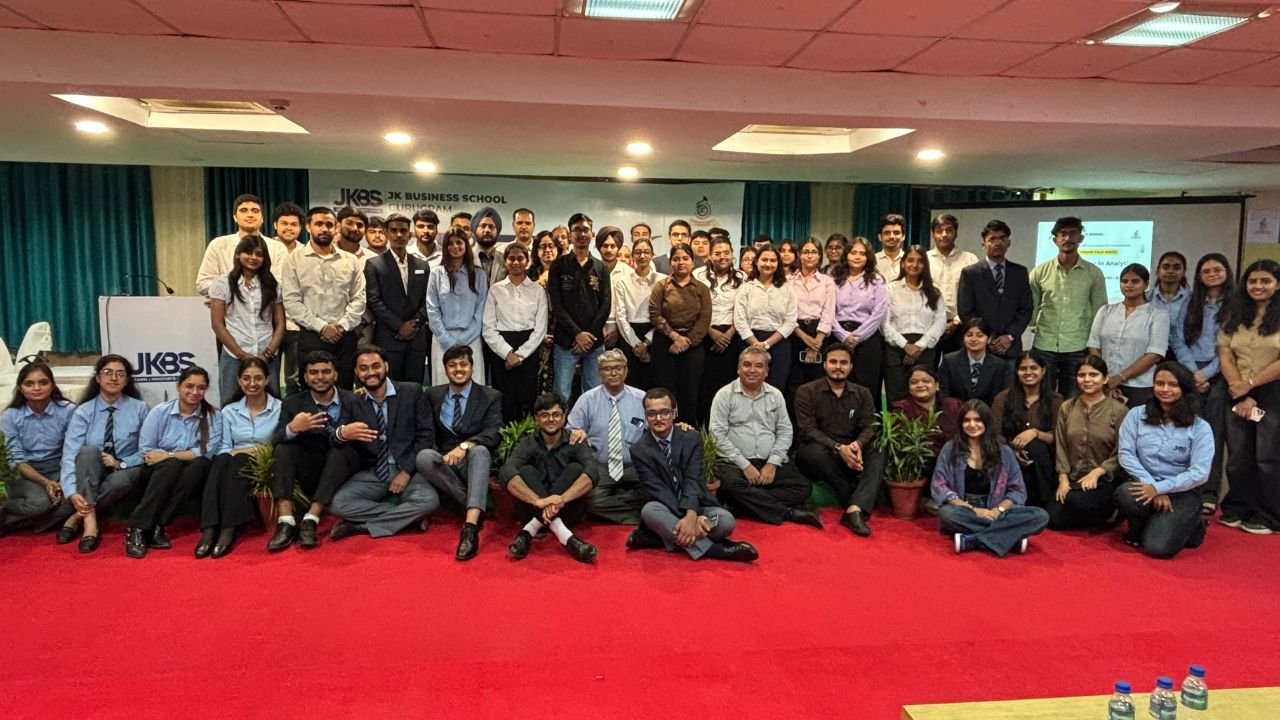
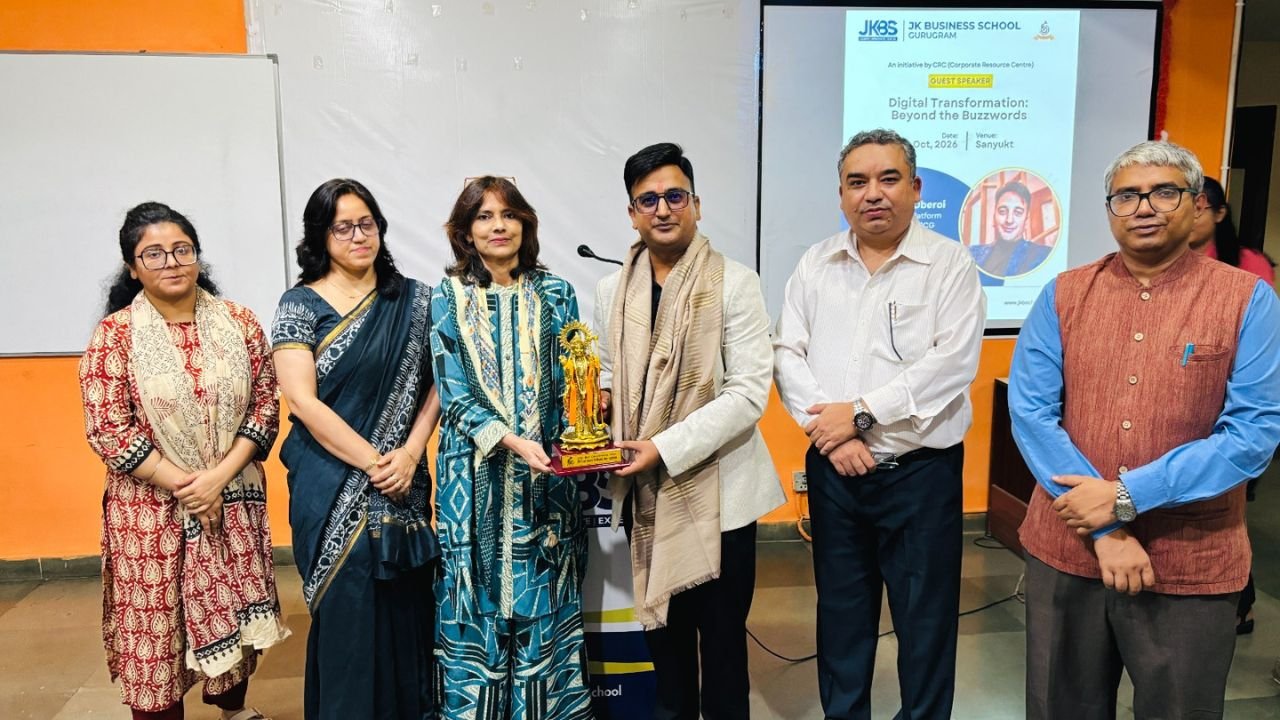
To help students understand this important distinction, JK Business School, Gurugram (JKBS), through its Corporate Resource Centre (CRC), organised an insightful guest session titled “Digital Transformation: Beyond the Buzzwords” on 17 October 2026.
The session was conducted by Mr. Sidhant Oberoi, Global IT Data Platform Senior Manager at Boston Consulting Group (BCG), who shared practical insights into digital transformation, strategic decision-making, technology adoption and the importance of aligning digital initiatives with business objectives.
Through real-world examples and industry perspectives, the session encouraged students to look beyond technological terminology and understand the business value that successful digital transformation should deliver.
Understanding Digital Transformation Beyond Technology
Digital transformation has become an important subject across industries as organisations increasingly integrate technology into their operations, customer experiences and decision-making processes.
However, one of the central messages of the session was that digital transformation should not be confused with the simple adoption of technology.
Mr. Oberoi explained that organisations must first understand the business problems they are trying to solve and the outcomes they want to achieve.
Introducing a new application, implementing an automated system or adopting a digital platform does not automatically mean that an organisation has undergone digital transformation.
True transformation takes place when technology contributes to meaningful improvements in how a business operates, serves customers and creates value.
This perspective encouraged students to examine digital transformation from a strategic management viewpoint rather than treating it exclusively as an information technology initiative.
Digitisation, Digitalisation and Digital Transformation: Understanding the Difference
One of the most informative parts of the session was Mr. Oberoi’s explanation of three frequently used terms: digitisation, digitalisation and digital transformation.
Although these terms are often used interchangeably, they represent different stages and approaches to technological change.
1. Digitisation: Converting Information into Digital Form
Digitisation refers to converting information from physical or analogue formats into digital formats.
For example, scanning paper documents and storing them electronically is a form of digitisation.
The underlying process may remain unchanged, but the information becomes easier to store, retrieve and manage digitally.
2. Digitalisation: Improving Existing Processes Through Technology
Digitalisation involves using digital technologies to improve existing business processes.
For example, replacing manual approval procedures with an online workflow can make operations more efficient and reduce processing time.
The primary objective is to improve how existing activities are performed.
3. Digital Transformation: Changing How a Business Creates Value
Digital transformation represents a broader strategic change.
It involves reconsidering how an organisation operates, delivers products or services, engages customers and generates value.
Rather than simply making an existing process digital, transformation may require redesigning the process itself.
The distinction helped students understand that digitisation changes the format of information, digitalisation improves processes, and digital transformation changes the way businesses create value.
Start with Value, Not Tools: A Key Lesson in Business Strategy
A particularly important message from Mr. Oberoi’s session was the need to “start with value, not tools.”
Organisations often face pressure to adopt the latest technologies because competitors are doing so or because a particular innovation has gained attention.
However, implementing technology without a clearly defined business objective can result in unnecessary complexity, inefficient investments and disappointing outcomes.
Mr. Oberoi encouraged students to consider digital transformation through the perspective of a chief executive officer.
A CEO must focus on broader organisational priorities, including:
- Growing the business: Identifying opportunities to improve performance and support sustainable growth.
- Simplifying operations: Reducing unnecessary complexity and improving efficiency.
- Delighting customers: Creating better experiences and addressing customer needs.
- Protecting the organisation: Managing risks and maintaining business resilience.
Technology should support these objectives rather than become an objective in itself.
For management students, this was an important lesson in strategic thinking. Before recommending any technological solution, future managers must understand the underlying business challenge and evaluate the value that the proposed solution can create.
The Role of Leadership in Digital Transformation
Digital transformation requires more than technical expertise. It also demands leadership, organisational alignment and effective decision-making.
During the session, Mr. Oberoi discussed how senior leaders must evaluate technological initiatives in the context of business strategy.
Leadership teams need to identify priorities, allocate resources, encourage collaboration and ensure that digital investments contribute to organisational goals.
This requires managers to balance innovation with practical considerations such as cost, operational requirements, employee capabilities and risk.
For students preparing for careers in management, understanding this leadership perspective is essential.
Future business leaders may not always be responsible for developing technology themselves, but they will increasingly be expected to make informed decisions about its implementation and business impact.
Why Digital Transformation Strategies Fail During Execution
Another significant area discussed during the session was the gap between developing a strategy and implementing it successfully.
An organisation may have a well-designed digital strategy, access to advanced technology and a clear vision for improvement. Yet execution can still fail because of organisational and operational challenges.
Mr. Oberoi highlighted several barriers that can prevent digital transformation initiatives from delivering their intended results.
Legacy Systems and Outdated Infrastructure
Many organisations depend on established technology systems that have been developed over several years.
While these systems may continue to support daily operations, integrating them with newer platforms can be difficult.
Legacy infrastructure can create technical limitations, increase implementation complexity and slow down transformation efforts.
Organisational Silos
Digital transformation frequently requires collaboration across departments.
However, teams may operate independently, maintain separate information systems or pursue different priorities.
These organisational silos can make it difficult to coordinate initiatives and achieve shared business objectives.
Resistance to Change and Slow Adoption
Employees may be comfortable with established processes and hesitant to adopt unfamiliar technologies or working methods.
Even when a new system offers clear advantages, its effectiveness depends on whether people understand and use it.
This makes communication, training and change management important components of successful digital transformation.
Measuring Activity Instead of Business Value
One of the most thought-provoking points was the difference between measuring implementation activity and measuring actual results.
An organisation may track the number of digital tools introduced, projects completed or employees trained.
However, these indicators do not necessarily demonstrate whether the transformation has improved business performance.
A more meaningful approach is to examine whether the initiative has improved efficiency, strengthened customer experience, reduced risks or contributed to business growth.
The discussion reinforced the importance of outcome-oriented management.
Connecting Strategic Thinking with Project Management
Digital transformation involves both strategic planning and effective project execution.
A strategy provides direction, while project management helps translate that direction into coordinated activities and measurable outcomes.
Mr. Oberoi’s discussion highlighted the importance of aligning implementation with broader organisational objectives.
Successful transformation requires teams to understand what needs to change, why the change matters and how progress should be evaluated.
This involves coordination between business functions, technology teams and organisational leadership.
For management students, the session demonstrated why project management should not be viewed only as scheduling tasks or meeting deadlines.
It also involves managing stakeholders, addressing obstacles, adapting to changing requirements and ensuring that project outcomes support business priorities.
Real-World Examples Bring Classroom Concepts to Life
One of the most valuable aspects of the guest session was the use of practical examples to explain complex management concepts.
Rather than discussing digital transformation only through theoretical frameworks, Mr. Oberoi connected the subject with situations encountered in professional environments.
These examples helped students understand how organisations approach technology-related decisions and why implementation challenges can arise even when a strategy appears sound.
The session demonstrated the importance of analysing business problems from multiple perspectives.
A technology initiative may appear promising from an operational standpoint but still require evaluation in terms of cost, customer experience, organisational readiness and long-term value.
By connecting these considerations, students gained a broader understanding of how management decisions are made in real business settings.
The Growing Importance of Digital Transformation in Management Education
As organisations continue to adopt digital technologies, the ability to understand and manage transformation is becoming increasingly relevant across business functions.
Digital transformation is no longer limited to information technology departments.
Marketing professionals use digital platforms and customer data to understand consumer behaviour. Finance professionals work with technology-enabled reporting and analytical systems. Human resource teams use digital solutions for recruitment, performance management and employee engagement.
Operations and supply chain professionals also rely on digital systems to improve coordination, visibility and efficiency.
For management students, this creates a need to develop both business knowledge and an understanding of technological change.
The session at JK Business School, Gurugram encouraged students to view digital transformation as an interdisciplinary management subject involving strategy, leadership, operations, technology and organisational behaviour.
Learning Beyond Classrooms at JK Business School, Gurugram
Industry interactions play an important role in connecting academic learning with professional expectations.
At JK Business School, Gurugram, guest sessions provide opportunities for students to engage with industry professionals and explore contemporary business challenges.
The session on “Digital Transformation: Beyond the Buzzwords” reflected this approach by bringing practical industry perspectives into the academic environment.
Through discussions on business value, technology adoption, strategic decision-making and implementation challenges, students were encouraged to apply classroom concepts to real-world situations.
Such interactions can also help students develop a clearer understanding of the competencies required in contemporary management roles.
The Role of the Corporate Resource Centre (CRC)
The Corporate Resource Centre (CRC) at JK Business School, Gurugram plays an important role in facilitating industry engagement and supporting students’ professional development.
By organising interactions with experienced industry professionals, the CRC helps connect students with perspectives from the corporate world.
These sessions provide exposure to emerging business trends, workplace expectations and practical management challenges.
The guest lecture by Mr. Sidhant Oberoi offered students an opportunity to understand digital transformation through the experience of a professional working in a global consulting environment.
It also reinforced the importance of learning directly from industry practitioners who can explain how management concepts are applied in professional settings.
Key Takeaways from the Session
The discussion offered several important lessons for students preparing to enter the business world.
First, digital transformation must begin with a clear understanding of business value.
Second, organisations should distinguish between converting information into digital form, improving processes through technology and fundamentally transforming business models.
Third, leadership plays an essential role in ensuring that technology investments support organisational priorities.
Fourth, successful execution requires attention to legacy systems, departmental coordination, employee adoption and change management.
Finally, organisations must measure transformation through meaningful business outcomes rather than simply tracking technological implementation.
Together, these insights encouraged students to adopt a practical and strategic approach to digital innovation.
An Insightful Conclusion to the Guest Session
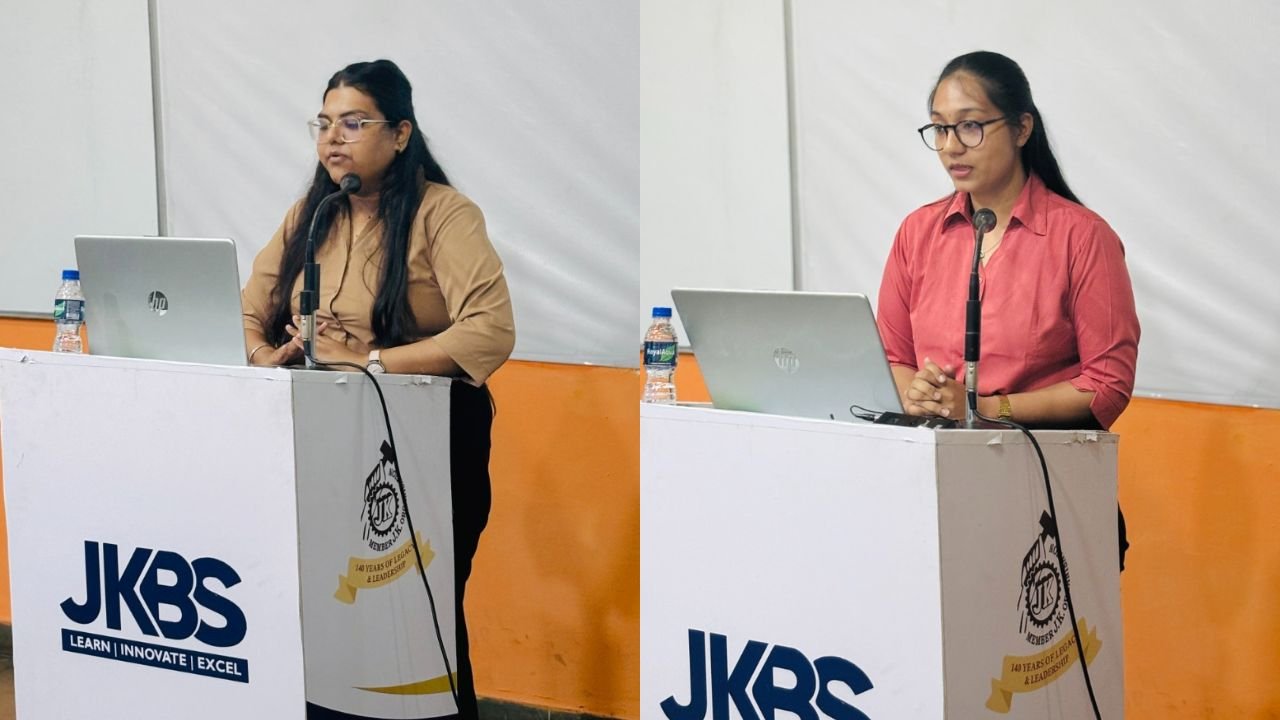
The session concluded with a Vote of Thanks on behalf of JK Business School, Gurugram.
Mr. Sidhant Oberoi was thanked for sharing his time, professional knowledge and valuable industry insights with the students.
Special appreciation was expressed for his clear explanation of digitisation, digitalisation and digital transformation, along with his emphasis on starting with business value rather than technology tools.
His discussion of the CEO’s perspective, project execution challenges and real-world business examples helped students develop a deeper understanding of the subject.
The Corporate Resource Centre, faculty members and participating students were also acknowledged for their contributions to the session.
Conclusion: Digital Transformation Begins with Business Value
The guest session “Digital Transformation: Beyond the Buzzwords”, organised at JK Business School, Gurugram on 17 October 2026, provided students with valuable insights into one of the most important developments shaping modern organisations.
Through his discussion, Mr. Sidhant Oberoi, Global IT Data Platform Senior Manager at Boston Consulting Group, demonstrated that digital transformation is not simply about implementing new technologies.
It is about understanding business challenges, making informed strategic decisions, improving organisational processes and creating meaningful value.
The session also highlighted why strong strategies require effective execution, collaboration, leadership and appropriate measures of success.
For management students, the central takeaway was clear: before adopting a technology, understand the problem it is intended to solve and the value it can create.
By facilitating such industry-oriented learning experiences, JK Business School, Gurugram continues to connect academic knowledge with practical business perspectives and support the development of future-ready management professionals.
To learn more about academic programmes, industry interactions and student life at JK Business School, Gurugram, visit www.jkbschool.org.